Which Types of Crane Trucks Are Used in Construction and Transport
Crane trucks started becoming common on job sites in the 1980s, with the famous Franna models leading the way. Since then, the technology has improved to handle the different demands of construction sites and transport jobs. This growth means the industry is now large and is expected to reach around $565 million AUD by 2025.
To help you understand the different types of crane trucks, how they’re used for heavy lifting, and which ones handle the transport tasks, Knowles Cranes wrote this guide to break down the specific strengths of each truck to help you match the right equipment for the job. If you need advice or a crane for your next project, consider us your partners in getting the lift done safely.
The 5 Crane Trucks for Heavy Lifting and Transport
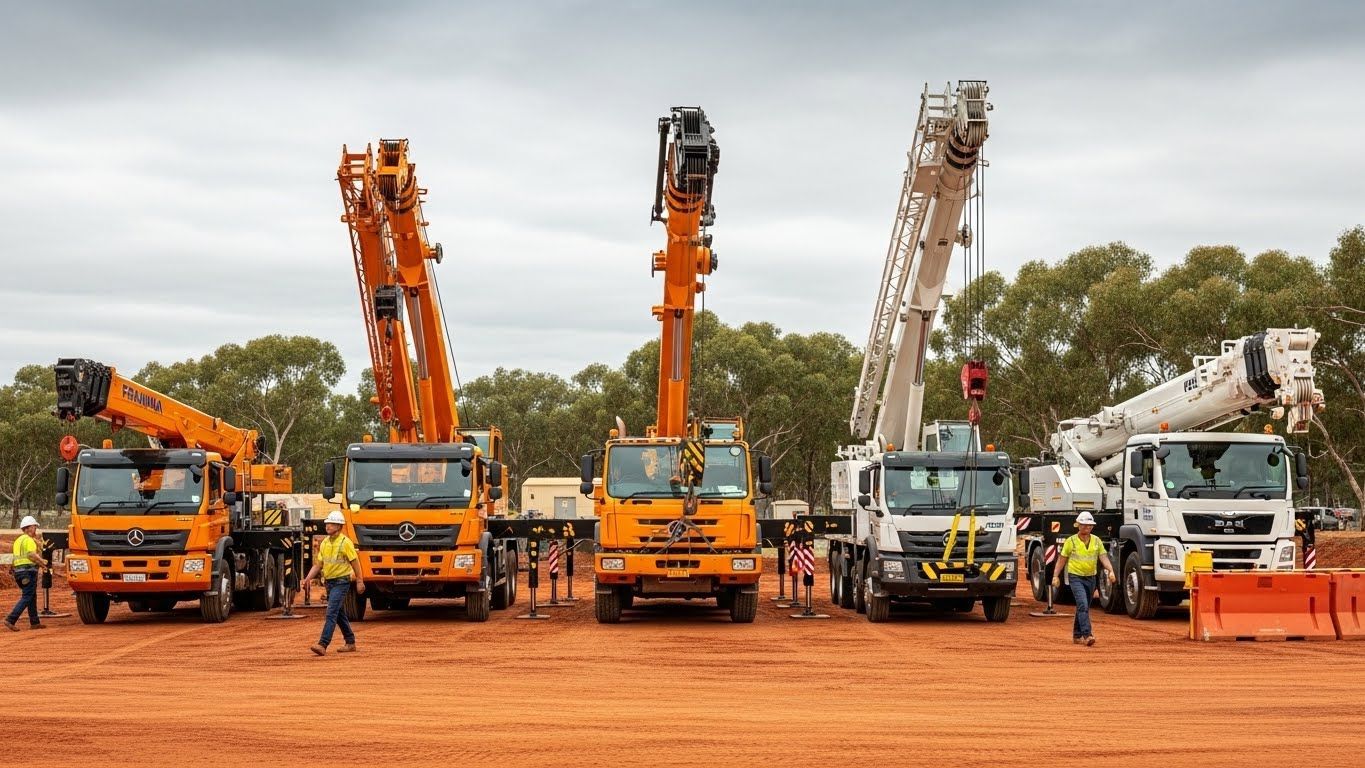
When you need maximum strength or the ability to work on uneven terrain, these three are the industry standard.
1. Pick-and-Carry (Franna) Cranes
The Franna crane is the ultimate multi-tasker. Unlike standard cranes that are stuck in one spot once set up, the Franna can pick up a heavy load and drive away with it.
- Best Used For: Moving heavy items like steel beams, concrete, or machinery from one side of the site to the other.
- Why Choose It: It saves you time and hassle. You don't need to load a truck just to move something around 100 metres; Franna just grabs it and goes.
2. All-Terrain Cranes
These are the industry heavyweights. They drive fast on the road but are built tough for off-road work. Plus, special steering lets them access tight areas, even though they are huge.
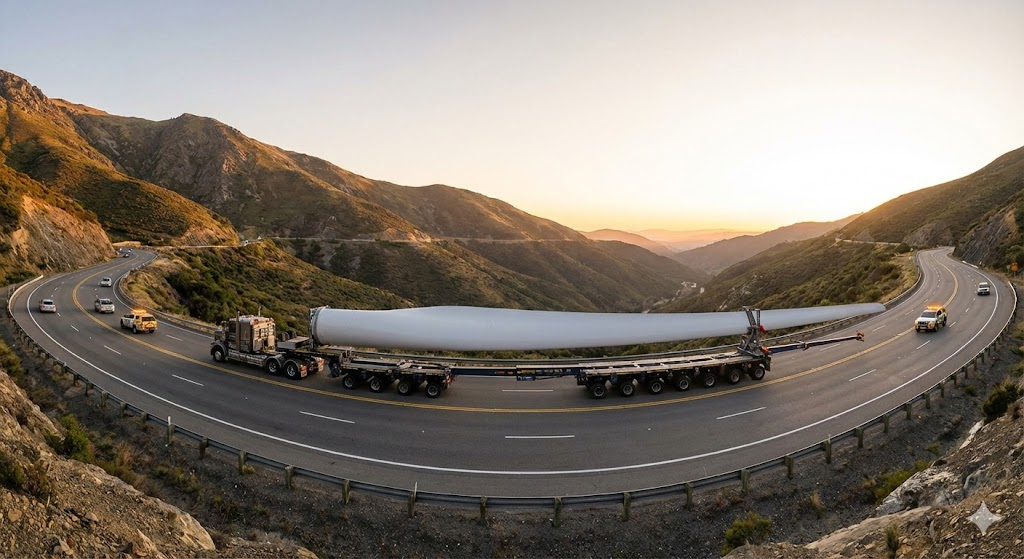
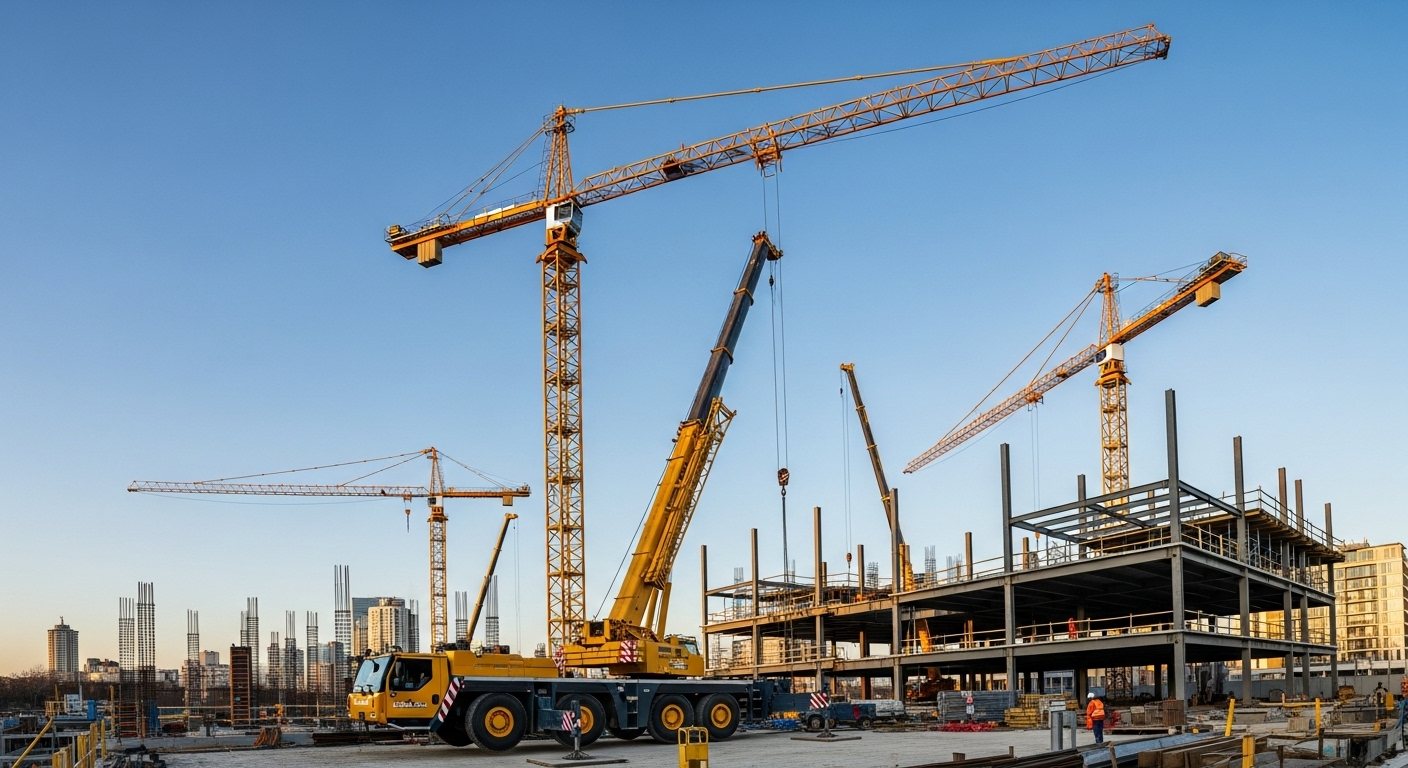
- Best For: Major infrastructure projects, wind farm construction, and high-rise building sites.
- Why Choose It: It saves travel time by driving fast, but still has the power to do so on rough sites.
3. Rough-Terrain Cranes
Designed strictly for off-road environments, these cranes feature four large rubber tyres and heavy-duty outriggers. They are not built for highway travel and are usually transported to the site on a float (low-loader trailer).
- Best For: Mining sites in WA or Queensland, oil and gas fields, and long-term projects on unpaved ground.
- Why Choose It: They offer the best safety and grip on soft, muddy, or rocky surfaces.
4. Knuckle-Boom (Loader) Cranes
Often called "vehicle-loading cranes" or HIABs, these look like large mechanical fingers that fold compactly behind the truck cab.
- Best For: Delivering building supplies, pallets, and installing utility poles.
- Why Choose It: The driver can load and unload the truck without waiting for a forklift or a separate crane, saving time and money on logistics.
5. Telescopic Truck Cranes
These are rigid trucks fitted with a straight, hydraulically extending boom. Unlike the knuckle-boom, the telescopic design focuses on reach and height.
- Best For: Urban construction deliveries where materials need to be lifted from the street to an upper floor or over a fence.
- Why Choose It: They provide the height of a small crane with the cargo capacity of a truck.
Quick Comparison: Crane Truck Types
| Crane Type | Category | Best Used For | Key Advantage |
|---|---|---|---|
| Pick-and-Carry (Franna) | Construction | Moving heavy loads (steel, concrete) across a job site. | Can pick up a load and drive away with it; no need to load a truck for short moves. |
| All-Terrain Crane | Construction | Major infrastructure, wind farms, and high-rise sites. | Combines highway travel speeds with the power to work on rough, uneven sites. |
| Rough-Terrain Crane | Construction | Mining (WA/QLD), oil & gas, and unpaved, soft ground. | Offers the best grip and safety on muddy, rocky, or difficult terrain. |
| Knuckle-Boom (Loader) | Transport | Delivering building supplies, pallets, and utility poles. | Self-loading ability means the driver doesn't need a forklift or separate crane. |
| Telescopic Truck Crane | Transport | Urban deliveries require lifts to upper floors or over fences. | Combines the height of a crane with the cargo storage of a truck. |
How Technology and Planning Improve Safe Lifting
As mentioned earlier, technology has advanced significantly since the 1980s. Modern crane trucks now use telematics and load-monitoring systems. These onboard computers constantly calculate the weight of the load, the boom angle, and the truck's stability. If an operator tries to lift something too heavy, the system warns them or stops the movement.
But, on-site security is not limited to the machine's internal computer; it is an entire support system.
- Engineered Planning: It is not always enough to depend on sensors only. For complex jobs, it is a winning strategy to have engineered crane-lift plans prepared in advance. This outlines the exact weight and reach required, thus giving you the assurance that the lift is safe before the engine starts.
- Precision Movement: This care is vital for machinery relocation. Moving expensive equipment, like generators or factory plants, needs more than just brute strength; it requires stability and precision to ensure your assets are transported without a scratch.
- Support Equipment: A safe site isn't just about the big cranes. You also need reliable forklifts and telehandlers working on the ground. Keeping these smaller machines in top condition is just as important for a smooth, safe operation.
- Round-the-Clock Support: The construction industry is not always on a timetable. The availability of 24/7 service means that if a technical issue arises during a night shift, an expert is available to support you and keep the project moving without costly delays.
The combination of high-tech on-site equipment and meticulous pre-planning minimises the risk of failure to a great extent, protecting employees working on the site as well as the project schedule.
Also Read This: Crane Safety Guide for Australian Worksites
Conclusion
Choosing the right crane truck starts with understanding what the job needs. Some projects demand strong lifting power on-site, while others simply need materials moved from one point to another.
If the work involves tight spaces or uneven ground, machines like the Franna or All-Terrain crane handle those conditions well. For transport-focused work, knuckle-boom and telescopic truck cranes make loading and delivery far more efficient.
If you want guidance for an upcoming lift or need help matching the right equipment to your project, Knowles Cranes can walk you through the options and point you in the right direction