Rigging Vs Lifting: Whats The Difference?
If you have ever booked a crane for roof trusses, a pool shell, a steel beam, or a large HVAC unit, you have probably heard the terms rigging and lifting used together. They are closely connected, but they are not the same job.
In plain terms, lifting is the action of raising, moving, and placing a load. Rigging is the planning and set-up that makes that lift safe and controlled. Understanding the difference helps homeowners, builders, and site supervisors ask the right questions, plan realistic timeframes, and keep a Victorian site compliant when conditions are tight or changing.
Rigging vs lifting
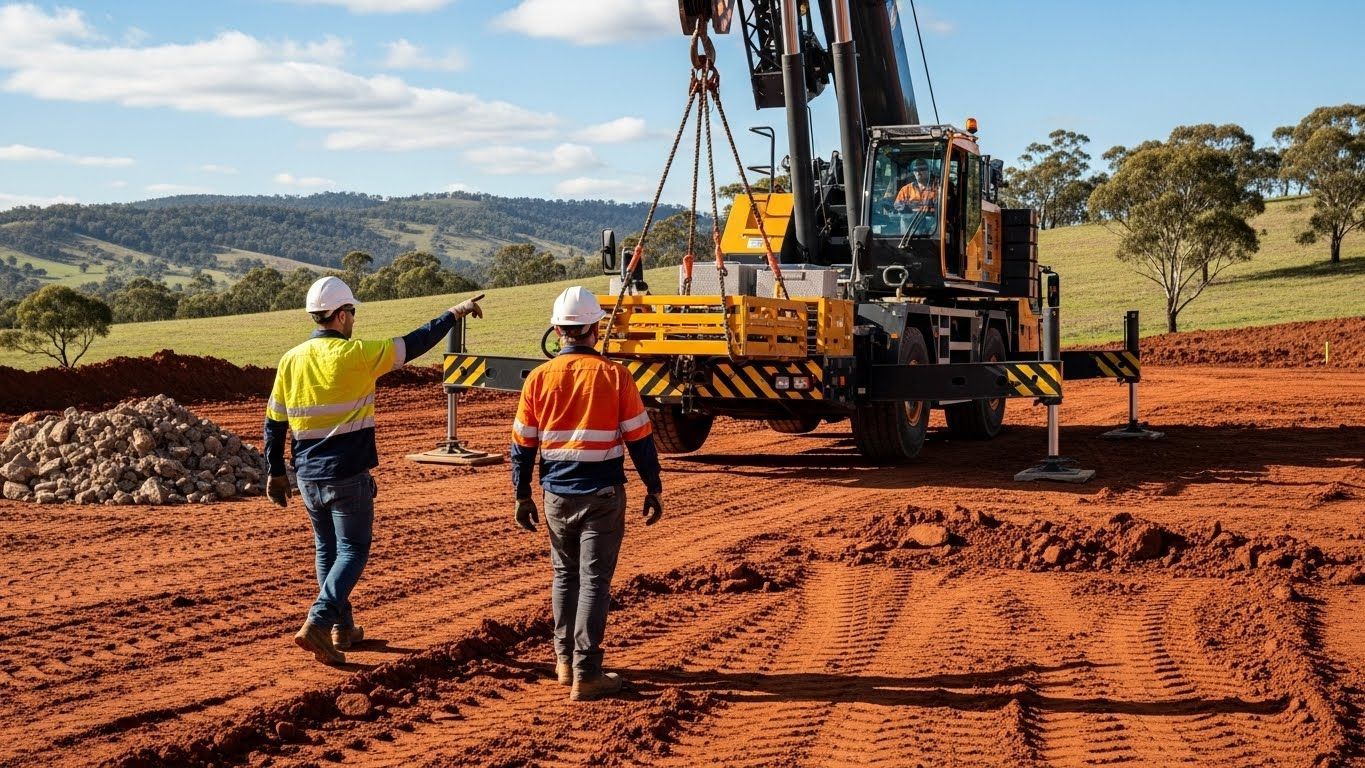
Lifting is what the crane does. Rigging is how the load is prepared and managed so the crane can lift it safely.
Think of it like moving a fridge. Lifting is the actual movement. Rigging is choosing the right straps, protecting corners, balancing the weight, clearing the path, and guiding it through a doorway without smashing the frame.
On a Victorian site, that difference matters because loads are rarely perfect. They can be long, flexible, top-heavy, fragile, or awkward to grab. The rigging work reduces swing, keeps the load level, and helps the operator place it accurately.
A quick comparison table:
| Item | Lifting | Rigging |
|---|---|---|
| What it is | The crane raising, moving, and placing the load | Planning, selecting gear, attaching, balancing, and controlling the load |
| Who is involved | Crane operator and supporting crew | Dogger and rigger (and sometimes a lift supervisor for more complex lifts) |
| What can go wrong | Overload, poor positioning, collisions, uncontrolled movement | Wrong gear choice, poor attachment points, unstable centre of gravity, load damage |
| Common examples in Victoria | Lifting roof trusses onto a new build in a tight estate | Choosing sling types, using spreader bars, protecting edges, setting tag lines |
| What it produces | A completed placement | A controlled lift set-up and method that keeps people and property safe |
Where the confusion usually happens
Rigging vs lifting gets blurred when people focus on the crane and forget the set-up work that happens before the hook ever takes weight. In Victoria, a few common site realities make rigging especially important.
Tight access and street-side set-ups
In inner and middle-ring suburbs, you might have narrow streets, parked cars, overhead service lines, and minimal room to establish an exclusion zone. Even in newer estates across Melbourne's growth corridors, blocks can be tight with limited laydown space. That pushes more responsibility onto planning and load control.
Overhead hazards and live environments
Overhead powerlines, comms cables, tree canopies, and nearby structures can turn a simple crane lift into a careful, step-by-step operation. Public areas add another layer, especially when a lift is near footpaths, schools, or active driveways.
Weather that changes the plan
Victoria can deliver four seasons in a day. Gusty winds, sudden rain, and wet ground conditions can affect stability, visibility, and load control. Even if the load is within crane capacity, wind can make it harder to stop rotation or prevent sail effects on large panels.
Real examples that show the difference
Here are a few practical scenarios where the lifting action is only one part of the job.

Roof trusses on a residential build
Lifting is when the crane picks up a truss pack and lands it onto the frame, while rigging is the crew work that checks weight distribution, selects the right slings, protects edges, keeps the pack level, and guides it into place without snagging bracing or pulling the frame out of square.
Pool or spa placement in a backyard
Lifting is when the crane swings the shell over fencing and lowers it into the excavation, while rigging is the planning and control that uses safe attachment points to prevent distortion, manages swing to avoid fences and eaves, and guides the shell down so it lands cleanly without scraping or cracking.
Steel beams on a commercial site
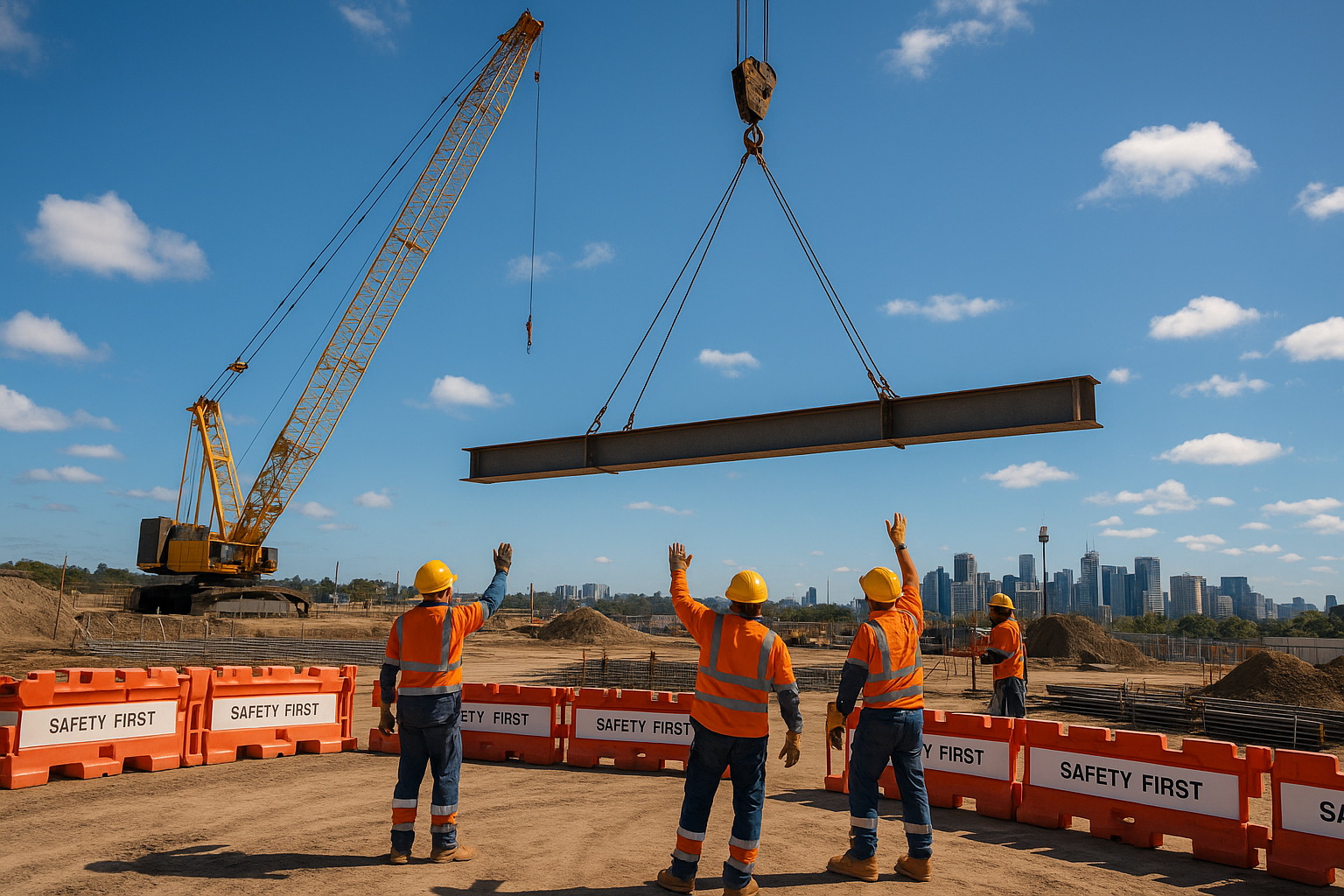
Lifting is when the crane lifts the beam and positions it onto columns, while rigging is the control work that manages balance, limits rotation, and supports accurate placement so workers are not tempted to hands-on wrestle a suspended load.
Safety and compliance considerations in Victoria
Rigging and lifting both sit inside broader workplace safety duties. On Victorian sites, WorkSafe Victoria is the regulator that provides guidance and administers high-risk work licensing requirements for activities like dogging and rigging.
Why licensing and competence matter
Some crane support tasks require people who are trained and appropriately licensed, especially when judgement is needed to select and apply slinging methods or direct a load when the operator cannot see it clearly. WorkSafe Victoria outlines when dogging work does and does not apply, including examples where judgement about slinging techniques is required.
Lift planning and communication
A safe lift depends on clear roles and simple communication. On busy Victorian sites, this often includes agreed hand signals or radios, a defined exclusion zone, and a plan for what happens if the load starts to spin, the wind picks up, or visibility drops.
Ground conditions and set-up checks
Wet ground, soft landscaping, recently backfilled trenches, and sloping driveways can affect crane stability and outrigger set-up. These are everyday issues across Melbourne and regional Victoria, especially after rainfall. A quick site check can prevent delays and reduce risk before the crane is even positioned.
If you want a broader refresher, this crane safety guide for Australian worksites covers the basics that support safe lifts day to day.
Short pre-lift checklist
Use this as a quick sense-check before the day starts. It is not a replacement for site-specific WHS processes, but it helps align everyone early.
- Confirm the load weight, shape, and any fragile points
- Check access, ground conditions, and set-up area for outriggers
- Identify overhead hazards like powerlines, trees, and eaves
- Confirm who is directing the lift and how you will communicate
- Set an exclusion zone and plan for nearby pedestrians or traffic
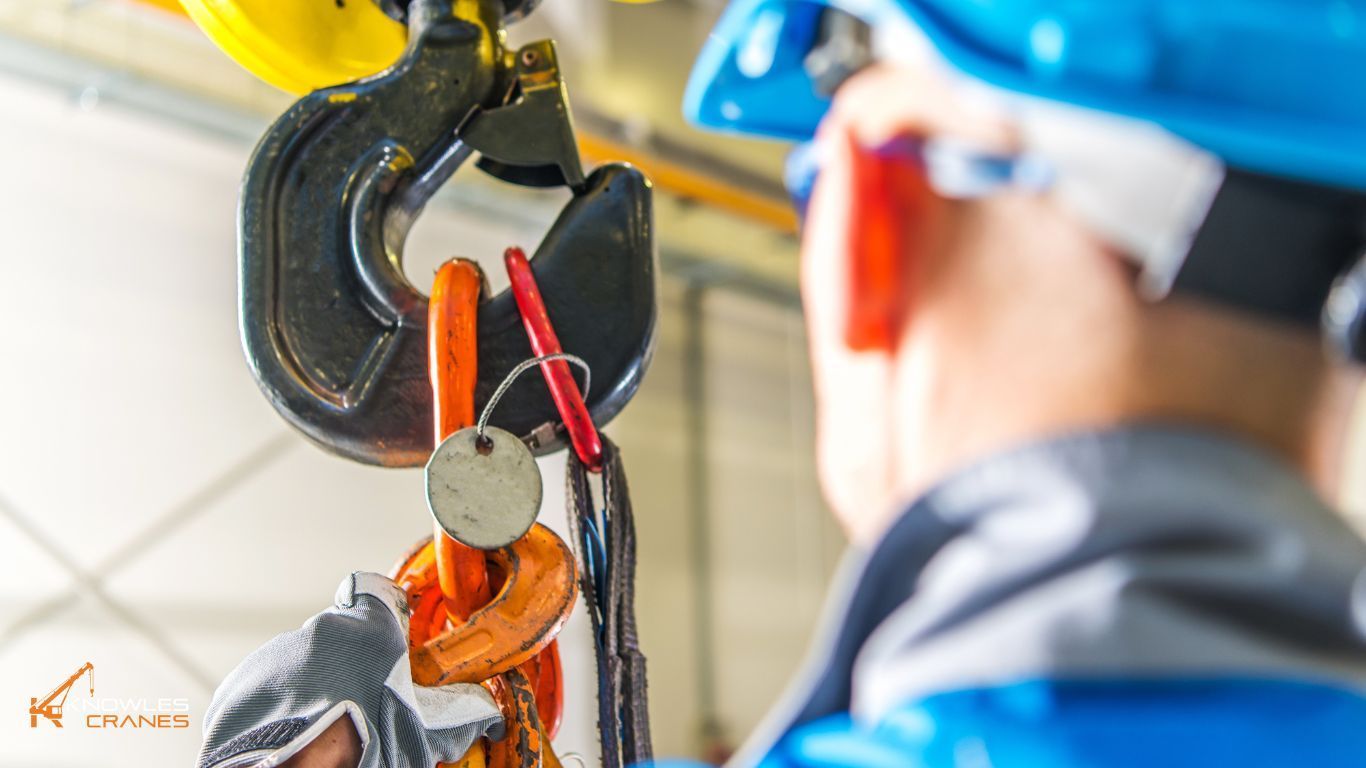
- Confirm the rigging gear is suitable and in serviceable condition
- Review wind and weather risks for the time window of the lift
- Agree on the placement sequence so the site is ready on arrival
Quick note for site leads: if anything changes on the day (wind picks up, access tightens, ground softens, trades crowd the area), pause and reset the plan before the hook takes weight.
How Knowles Cranes approaches the work
For homeowners, builders, and supervisors, the most helpful approach is to treat rigging and lifting as one coordinated process, not separate tasks. Knowles Cranes supports sites across Victoria with crane and rigging services that match the job scope, access conditions, and safety requirements.
For more complex lifts, engineered lift planning helps confirm crane capacity limits, set out the lifting steps, choose suitable rigging gear, and lock in safety controls before work starts.
Conclusion
Rigging vs lifting is simple once you separate the roles. Lifting is the movement of the load, while rigging is the preparation and control that keeps that movement safe, steady, and predictable. On Victorian sites where access is tight, weather shifts quickly, and hazards sit close to the work area, knowing the difference can be the line between a smooth install and a stressful near miss.
If you are planning a crane lift and want to sanity-check what the job really needs, review the scope early and make sure rigging and lifting are considered together. For local projects across Victoria,
Knowles Cranes is open 24/7 and can be reached on 0425 053 243 for practical guidance on lift set-up and the safest way to get the load where it needs to go.